
WELCOME BONUS 300%
UP TO €2000 + 100
FREE SPINS
UP TO €2000 + 100
FREE SPINS
Home → Roulette
Roulette at Pelican Casino
Which Bets are Excluded from Bonus Wager?
The welcome bonus of 300% up to €2,000 is subject to wagering requirements, and certain bets at Pelican Casino contribute differently. French Roulette with La Partage rule, which refunds half of the stake on even-chance bets when a 0 is rolled, has a reduced house edge of 1.35%. This specific variant, due to its favourable rule, is excluded from contributing to the bonus wager, meaning bets placed on it do not count towards fulfilling the bonus turnover.
While French Roulette with La Partage is excluded, other roulette variants at Pelican Casino offer varying contributions. For instance, standard table games contribute 10% to the bonus wager. This means that for every €100 wagered on these games, only €10 will count towards the 300% welcome bonus turnover requirement, impacting how quickly the bonus can be converted to real money.
Understanding these exclusions is crucial for players aiming to clear the €2,000 bonus. Players should verify specific game contributions to ensure efficient bonus wagering and avoid disappointment when trying to withdraw winnings.
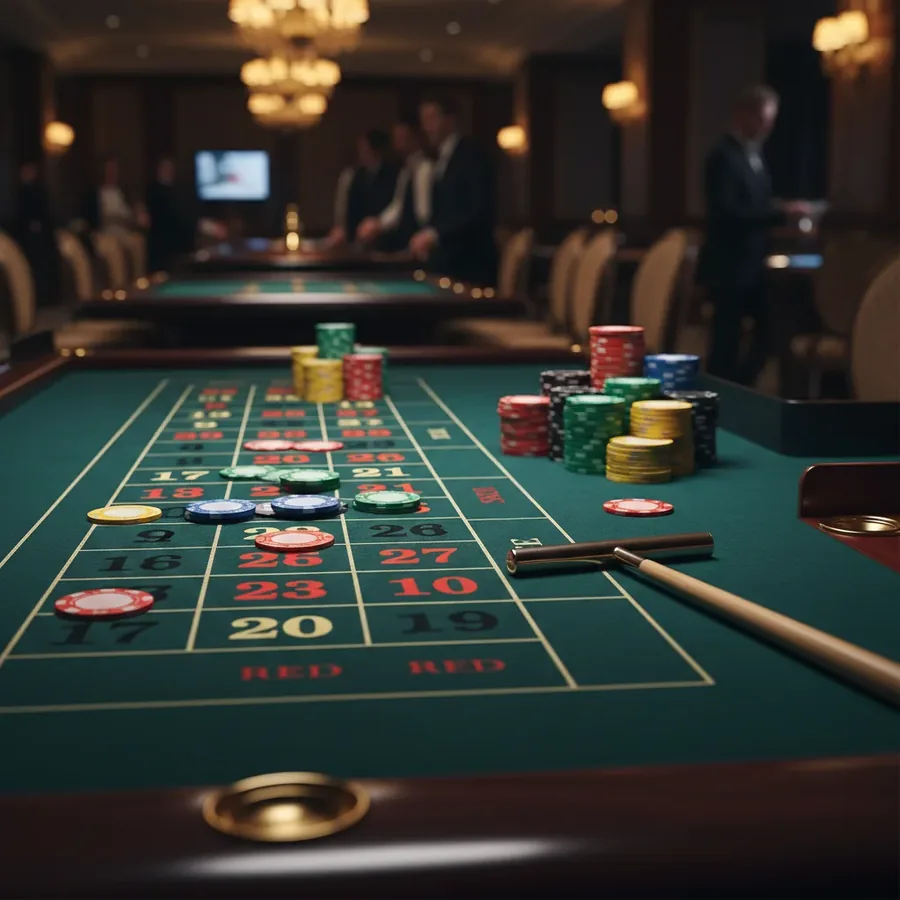
French with La Partage vs European
French Roulette with La Partage offers a superior player advantage with a house edge of just 1.35% on even-chance bets, thanks to the rule refunding 50% of the stake when a 0 appears. This contrasts with European Roulette, which has a higher house edge of 2.70% across all bets on its single-zero wheel. The difference of 1.35% directly impacts player returns over the long run.
In European Roulette, all bets, including the straight-up bet with a 35:1 payout, carry a 2.70% house edge. French Roulette, while also featuring 37 sectors and a single zero, applies La Partage only to even-chance bets like Red/Black or Odd/Even, maintaining the 2.70% house edge on internal bets. This distinction can significantly affect strategies for players seeking the lowest possible house advantage.
The Pelican Casino bonus wagering may implicitly favour games with a lower house edge, but players must be aware of specific exclusions. While French Roulette with La Partage is noted for its favourable 1.35% house edge on specific bets, its contribution to bonus wagering might be limited. Therefore, a €100 wager on French Roulette's even chances might only count as €10 towards the bonus turnover, unlike other games with a 10% contribution.
Mobile Tables: Which Betting Fields Become Smaller
Pelican Casino's mobile platform offers access to live roulette tables such as Auto Roulette Classic 1 Live and Ultimate Roulette, both utilizing a European wheel with 37 sectors. These tables adhere to the standard RTP of 97.30% and a house edge of 2.70%, ensuring a consistent gaming experience across devices. The betting fields themselves are adapted for mobile screens, not reduced in terms of available options.
While the visual representation of betting fields is optimized for mobile, the fundamental roulette variants remain. American Roulette, with its 38 sectors including a double zero (00), presents a higher house edge of 5.26%. This variant, if available on mobile, would retain its statistical disadvantage compared to its European counterpart, regardless of screen size adjustments on the interface.
The range of bets available on mobile tables, such as straight-up bets paying 35:1, remains consistent with desktop versions. Limits on tables like Ultimate Roulette can go up to €5,000, and on Auto Roulette Classic 1 Live, up to €2,000. These limits are unaffected by the mobile interface, ensuring players can place their desired wagers within the specified boundaries.
Table Limit 500 Euro Stops Every Doubling
The presence of table limits at Pelican Casino, such as a €500 maximum bet on certain live roulette tables, can significantly impact progression betting strategies. For instance, a player employing a doubling strategy on a table with a €500 limit would be unable to continue doubling their bet indefinitely if they reach this threshold. This effectively caps the potential winnings and losses associated with such systems.
In live roulette games like Ultimate Roulette or Quantum Roulette, which can have limits up to €5,000, a €500 limit would represent a specific tier of betting. If a player were to reach €500 on a doubling sequence, the next intended bet (e.g., €1000 after a €500 bet) would be impossible if that table’s absolute maximum is €500. This restriction is crucial for managing bankrolls and understanding game dynamics.
The specific mention of a €500 limit stopping doubling implies that even on tables with higher potential maximums, this lower threshold might be enforced for specific bet types or in certain live casino environments. For players utilizing betting systems that rely on increasing stakes, such a limit necessitates a re-evaluation of their strategy to align with the available betting windows and prevent potential failures in their progression.
Betting Window Missed: What Happens to the Chip
When playing live roulette at Pelican Casino, such as Auto Roulette Classic 1 Live, players have a specific betting window to place their chips before the round begins. If a player misses this window, their wager for that particular spin is typically forfeited. This means the chip remains on the table but is not counted for the current round's outcome, effectively becoming a lost stake.
The consequences of missing the betting window are consistent across most live roulette variations, including Ultimate Roulette and Quantum Roulette, which offer expanded features like multipliers. Regardless of the potential payouts or RTP of 97.30%, a bet placed after the window closes does not register. This rule ensures fair play and allows the automatic wheel or dealer to proceed without delay.
For players aiming to meet wagering requirements on their 300% welcome bonus up to €2,000, missing the betting window has a direct financial implication. A missed bet does not contribute to the 10% wager for table games, nor does it count towards clearing the bonus. Players need to be attentive to the timer on screen to ensure their bets are placed and contribute effectively.
Roulette bet types at a glance
| Bet | Payout | Win Chance | Numbers Covered | House Edge |
|---|---|---|---|---|
| Roulette Europäisch (einfache Null, 37 Sektoren) | Straight 35:1, Split 17:1, Street 11:1, Corner 8:1, Six Line 5:1, Dozen 2:1, Column 2:1, Rot/Schwarz 1:1, Odd/Even 1:1, 1-18/19-36 1:1 | 97.30% | 37 Sektoren (1–36 + 0); Auszahlungen wie für 36 Sektoren – daher konstanter Edge auf ALLE Wetten | 2.70% |
| Roulette Französisch, innere Einsätze (La Partage gilt nicht) | Straight 35:1, Split 17:1, Street 11:1, Corner 8:1, Six Line 5:1, Dozen 2:1, Column 2:1 | 97.30% | Rad gleich (37 Sektoren), aber La Partage/En Prison gilt nicht für innere Einsätze – Edge bleibt europäisch | 2.70% |
| Roulette Amerikanisch (doppelte Null, 38 Sektoren) | Straight 35:1, Split 17:1, Street 11:1, Corner 8:1, Six Line 5:1, Dozen 2:1, Column 2:1, Rot/Schwarz 1:1 | 94.74% | 38 Sektoren (1–36 + 0 + 00); Auszahlungen wie beim europäischen Rad, aber der zusätzliche Sektor verdoppelt den Hausvorteil | 5.26% |
| Roulette Amerikanisch – Five Number Bet (0, 00, 1, 2, 3) | Five Number 6:1 (deckt 5 von 38 Sektoren) | 92.11% | Einzige Wette am amerikanischen Rad mit Edge über 5,26% – „Fallenwette“. Kein Äquivalent am europäischen Rad | 7.89% |
| Roulette Französisch mit La Partage (gerade Chancen) | Rot/Schwarz 1:1 (bei 0 Rückerstattung 50%), Odd/Even 1:1, Low/High 1:1; Innere Einsätze ohne La Partage: Straight 35:1, Split 17:1, Street 11:1, Corner 8:1 | 98.65% | Bei 0 wird die Hälfte des Einsatzes auf gerade Chancen zurückerstattet (Rot/Schwarz, Pair/Impair, Manque/Passe). En Prison gibt denselben 1,35%. Regel gilt NUR für gleiche Einsätze | 1.35% |
What Outside Bets with 1:1 Actually Pay
Outside bets such as Red/Black, Odd/Even, and Low/High on French Roulette with La Partage offer a 1:1 payout. This means a winning bet of €10 returns €10 profit. These bets are only applicable to even-chance outcomes, not inside bets, and are directly impacted by the La Partage rule.
When the ball lands on zero in French Roulette, half of the stake on these 1:1 outside bets is returned. This effectively reduces the house edge to 1.35%, a significant improvement compared to American Roulette's 5.26% house edge. The 'En Prison' rule offers a similar player-friendly outcome for these bet types.
In comparison, American Roulette also offers 1:1 payouts on these outside bets, but without the benefit of La Partage or En Prison. The presence of both a '0' and '00' sector on the American wheel inflates the house edge to 5.26% on all bets, including those paying 1:1.
How Much Budget Withstands 2.70 Percent House Edge
A budget of €100 playing European Roulette, which has a 2.70% house edge, will theoretically lose €2.70 over the long term for every €100 wagered. This theoretical loss is averaged across a very large number of spins, not guaranteed for a single session. European Roulette features 37 sectors, including a single zero.
To maintain a €100 budget through gameplay on a European Roulette table, a player would need to account for the 2.70% house edge. For example, a player aiming to make 100 bets of €10 would need to start with approximately €102.70 to have an even chance of finishing with their initial stake, assuming average outcomes.
Comparing this to American Roulette, where the house edge is 5.26%, a €100 budget would theoretically lose €5.26 for every €100 wagered. This higher house edge means that players in American Roulette can expect their budget to deplete faster than on European Roulette tables over extended play.
D'Alembert and Fibonacci Against the Same Table Limit
The D'Alembert betting system involves increasing the bet by one unit after a loss and decreasing it by one unit after a win, aiming for a balanced outcome. This system is often used on even-money bets in roulette, like those found on European Roulette tables. The maximum payout for a straight-up bet is 35:1.
The Fibonacci system, conversely, follows a sequence where each number is the sum of the two preceding ones, with bets increasing after losses and resetting after wins. Both systems are applied to manage wagers, but neither can overcome the inherent house edge of 2.70% on European Roulette or 5.26% on American Roulette.
Table limits, such as those on Auto Roulette Classic 1 Live with stakes from €0.10 to €2,000, can restrict the application of progressive betting strategies like D'Alembert or Fibonacci. A player using a large progression on D'Alembert might hit the €2,000 limit quickly after a string of losses, thus limiting the system's effectiveness.
Error: Using Opposite Bets for Wagering Fulfillment
Wagering requirements for bonuses, such as the 300% welcome bonus up to €2,000 plus 100 free spins, often necessitate betting on the outcome of games. A common error players make is attempting to fulfill these requirements by placing opposing bets simultaneously on the same spin, for example, betting on red and black. This strategy is generally not permitted by casinos.
Casinos typically exclude bets that cover all or a significant portion of the roulette wheel from contributing to wagering requirements. Placing a bet on Red and Black simultaneously in European Roulette (37 sectors) or American Roulette (38 sectors) would effectively negate the risk of loss but would not typically count towards fulfilling the bonus turnover. This is to prevent players from cycling bonus funds without genuine play.
The house edge on table games like roulette is often a factor in bonus wagering contributions, with table games contributing 10% to bonus turnover. Using opposite bets, even if they were allowed, would still expose the player to the house edge on each bet, albeit at a lower effective rate if the bets were perfectly balanced. For instance, a bet on Red and Black in European Roulette still leaves the zero sector as a losing outcome.
Corner 8:1 Covers Four Numbers
A Corner bet in roulette, paying 8:1, covers a block of four numbers on the betting layout. This bet is available on both European and American Roulette wheels. For example, a player could bet on the corner covering numbers 1, 2, 4, and 5.
The payout for a winning Corner bet is 8 times the original stake. If a €10 Corner bet wins, the player receives €80 in profit, in addition to their original €10 stake being returned. This differs from the 35:1 payout for a Straight bet, which covers only a single number.
In American Roulette, which has a 5.26% house edge due to the double zero, a Corner bet still pays 8:1. While this bet covers four numbers, the additional sector on the American wheel increases the overall house advantage compared to European Roulette, which has a 2.70% house edge and also offers the 8:1 payout for this bet type.
Multiplier 500x Applies Only to Straight Bets
Quantum Roulette by Playtech features multipliers up to 500x, a key component of its bonus structure. This exciting feature significantly alters the potential payout for certain bets within the game. The maximum multiplier of 500x is indeed a noteworthy figure for players to consider.
These impressive multipliers are exclusively applicable to straight bets, meaning only a single number wager will benefit from the amplified payout. In contrast, other bet types on the European wheel, such as split or street bets, do not qualify for these enhanced returns. This exclusivity is a critical distinction.
Players should be aware that this 500x multiplier is a specific feature of Quantum Roulette and does not extend to other roulette variants. For example, Auto Roulette Classic 1 Live offers a maximum payout of 35:1 on straight bets, highlighting the unique nature of Playtech's offering. This direct comparison underscores the special conditions applied.
100 Euro Bankroll: 100 Rounds Simple Chances
With a 100 Euro bankroll, a player aiming for 100 rounds on simple chances faces a specific wagering scenario. Simple chances, like red/black or odd/even, typically pay 1:1. This means that for every 1 Euro bet, the potential return is 1 Euro plus the original stake.
If a player bets 1 Euro per round on simple chances, a 100 Euro bankroll theoretically allows for 100 rounds. However, this does not account for any house edge, which for European roulette stands at 2.70%. This means over many rounds, a small portion of the bankroll is expected to be lost.
The bonus terms specify a 10% game contribution from table games towards wagering requirements. For a 300% welcome bonus up to €2,000, a player depositing €667 would receive the maximum €2,000 bonus, requiring €80,000 in turnover (€2,000 x 40). This would necessitate significantly more than 100 rounds on simple chances.
European or American: Which Wheel Pays Better
The European roulette wheel, with its single zero sector, offers a superior player advantage compared to its American counterpart. The RTP for European roulette is 97.30%, corresponding to a house edge of 2.70%. This is a standard for all bets placed on this wheel type.
In stark contrast, the American roulette wheel features both a single zero and a double zero, increasing the total sectors to 38. This addition inflates the house edge to 5.26%, with a corresponding RTP of 94.74%. The five-number bet on the American wheel, covering 0, 00, 1, 2, and 3, presents the highest house edge at 7.89%.
Roulette Französisch mit La Partage offers an even better proposition for even-money bets, with an RTP of 98.65% and a house edge of only 1.35%. This rule, where half the stake is returned on even chances when a zero occurs, significantly benefits players compared to standard European or American wheels.
RTP vs. House Edge: Same Number Differently
Return to Player (RTP) and House Edge are two sides of the same coin, describing the casino's advantage over the player. An RTP of 97.30% on European Roulette indicates that, theoretically, 97.30% of all wagered money is returned to players over an extended period. This directly implies a 2.70% House Edge (100% - 97.30%).
The American Roulette variant presents a lower RTP of 94.74%, which equates to a higher House Edge of 5.26%. This increased edge is due to the presence of the double zero (00) alongside the single zero (0), adding an extra sector without a corresponding increase in payout ratios for standard bets.
Roulette Französisch mit La Partage provides a distinct advantage for players on even-chance bets. With an RTP of 98.65%, its House Edge is reduced to 1.35%. This is achieved through the 'La Partage' rule, which refunds half the bet on even money wagers when the ball lands on zero, effectively halving the edge on those specific bets.
Why the Ball Has No Memory
The fundamental principle governing roulette, and indeed most casino games, is that each spin is an independent event. The outcome of previous spins has absolutely no bearing on the outcome of the next spin; the ball has no memory of where it landed before.
This concept is crucial for understanding probability in roulette. For instance, on a European wheel with 37 sectors, the chance of landing on any specific number, such as '17', remains a constant 1 in 37 for every single spin, regardless of past results. The RTP of 97.30% reflects this consistent probability over countless spins.
Similarly, the American wheel's house edge of 5.26% is maintained because the presence of the double zero (00) consistently alters the odds for all bets. Whether the ball lands on red or black consecutively, the probability of the next spin's outcome is unaffected by these streaks, underscoring the independent nature of each play.
Contact
Live - online chat
Banking









Providers












Pelican Casino 2026