
WELCOME BONUS 300%
UP TO €2000 + 100
FREE SPINS
UP TO €2000 + 100
FREE SPINS
Home → Blackjack
Blackjack at Pelican Casino: Variants, Rules and Payouts
One Deck vs Eight Decks in House Edge
Blackjack Ein Deck, klassische Regeln, 3:2 yields an RTP of 99.85% with a house edge of only 0.15%. This configuration offers a superior mathematical advantage compared to multi-deck variants that typically increase the casino's hold percentage significantly over long-term play sessions for the average participant. The lower edge results from reduced card counting possibilities and fewer deck penetration effects during standard shoe dealing procedures at online tables. Fewer decks equal a lower advantage; one deck gives approximately −0.48 percentage points compared to eight decks, often compensated by stricter rules.
This single-deck format contrasts sharply with Blackjack 6 Decks, S17, DAS, DOA, which presents an RTP of 99.54% and a house edge of 0.46%. The additional four decks increase the theoretical house advantage by roughly 0.31 percentage points, altering the expected return on investment for players employing basic strategy consistently. Players must adjust their betting patterns to account for this slight reduction in profitability when transitioning between different table limits and game speeds offered by the provider.
Blackjack Auszahlung 6:5 statt 3:2 (6 Decks) reduces the effective payout structure, resulting in an RTP of 98.15% and a house edge of 1.85%. Replacing the standard 3:2 ratio with 6:5 adds exactly +1.39 percentage points to the casino's advantage, which is stronger than any other single rule change available in modern blackjack variants. A $10 bet pays $12 instead of $15, drastically reducing the potential bankroll growth rate for skilled players utilizing optimal decision-making frameworks daily.
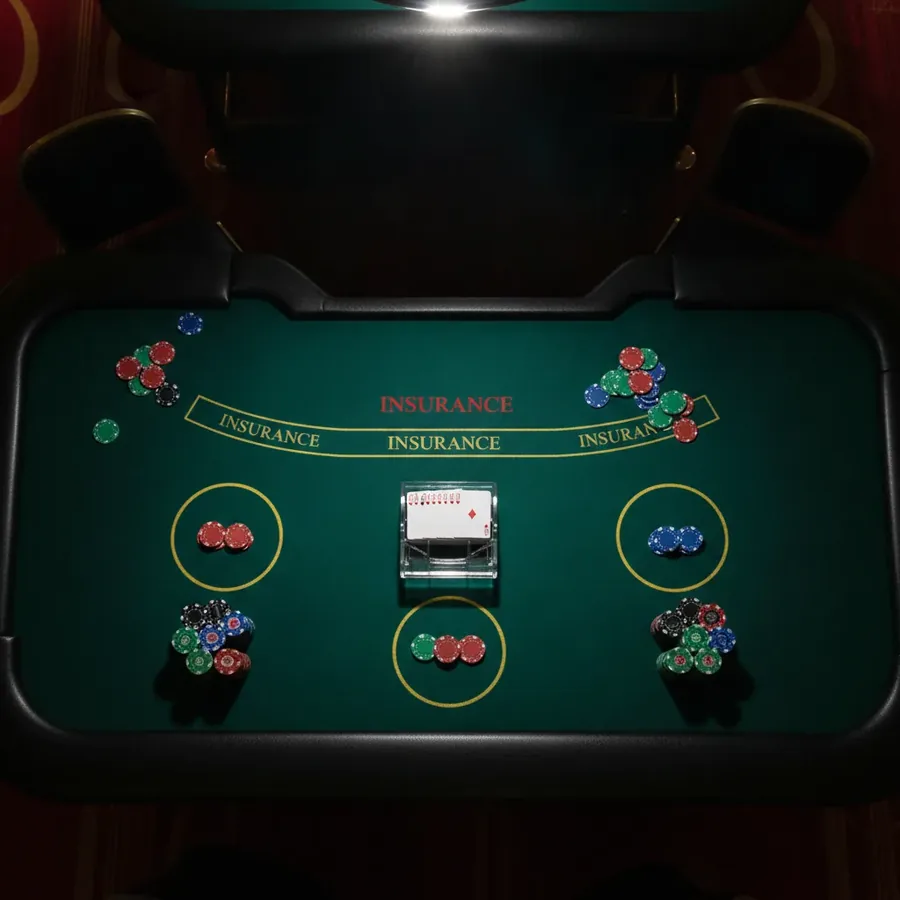
What Push Means: Stake Returns to You
A push occurs when the player and dealer tie, resulting in a stake return rather than a win or loss. This outcome effectively pauses the house edge accumulation for that specific hand. Players retain their full wager amount without any deduction from their balance.
In standard games like Blackjack 6 Decks with S17, pushes happen frequently enough to impact session duration. Unlike side bets such as Insurance which have a distinct 92.53% RTP, the main game flow remains neutral during ties. The 0.46% house advantage applies only to resolved hands where one party wins.
This mechanism extends bankroll longevity by preventing immediate losses on tied totals. A player facing a 0.46% disadvantage avoids losing value on these neutral outcomes. The total turnover requirement is met slower, requiring more hands to clear the bonus.
Which hands are excluded from Surrender?
Blackjack Surrender allows players to forfeit half their bet after the dealer checks for blackjack. This rule improves the Return to Player percentage by approximately 0.08 percentage points. It is a valuable tool for minimizing losses on weak starting hands against strong dealer upcards.
The option is unavailable if the dealer already holds a natural blackjack. Early surrender, which is far more valuable at up to -0.6 percentage points, is extremely rare and not offered here. Late surrender restricts the move until the dealer confirms they do not have an instant win.
Players must use this feature strategically on hard totals of fifteen or sixteen. Failing to surrender when advised by basic strategy costs money over time. The 50% payout structure ensures that only half the original risk is realized as a loss.
Split hands generally cannot be surrendered once separated into individual wagers. This limitation reduces the flexibility available to manage variance during volatile sessions. Players should evaluate the dealer's upcard before deciding to split or stand.
Set session stop after 30 percent loss
Implementing a strict loss limit protects the bonus funds from rapid depletion during unlucky streaks. Stopping play after losing thirty percent of the allocated deposit preserves capital for later sessions. This discipline prevents emotional chasing of losses that often leads to greater deficits.
Table games contribute only 10% toward the wagering requirements compared to slots at 100%. Playing too long at low contribution rates accelerates the erosion of the playable balance. A 30% cutoff ensures that the remaining funds are sufficient to meet the high turnover targets.
Lightning Blackjack offers multipliers up to 25x but maintains a 99.56% RTP similar to standard variants. High volatility features can drain a bankroll quickly despite favorable theoretical returns. Setting a hard stop at 30% loss mitigates the risk of busting before clearing the bonus.
Quantum Blackjack Plus Live allows bets up to 5,000 EUR with multipliers reaching 1,000x. Such high stakes increase the speed at which a 30% threshold is reached. Managing bet sizes relative to the remaining balance is crucial for adherence to this rule.
Insurance Pays 2:1 Yet Still Costs Money
Insurance is a side bet offered when the dealer shows an Ace, paying 2:1 if they have blackjack. Despite the attractive payout ratio, this bet carries a massive 7.47% house edge in six to eight deck games. It is statistically unfavorable for the vast majority of players following optimal strategy.
The Return to Player for insurance stands at a poor 92.53%, significantly lower than the main game. Basic strategy dictates always rejecting this bet unless counting cards with a true count of +3 or higher. Most casual players lack the skill to overcome this substantial mathematical disadvantage.
Accepting insurance converts a potential push into a guaranteed loss on the main hand while gaining the side bet. Even if the dealer has blackjack, the net result is often neutral or slightly negative due to the vig. Avoiding this side bet preserves the integrity of the primary 99.54% RTP game.
The maximum insurance wager is capped at fifty percent of the original main bet. This limit restricts the potential upside but does not alter the negative expected value. Consistently taking insurance erodes the bankroll faster than playing the main game alone.
Blackjack variants at a glance
| Variant | Payout | House edge | Rule | Bet range |
|---|---|---|---|---|
| Blackjack Insurance / Versicherung (6–8 Decks) | 92.53% | 7.47% | Separate Nebenwette bis 50% der Hauptwette, wenn der Dealer ein Ass hat. Basisstrategie schreibt IMMER Ablehnung vor (außer Karten zählen bei True Count ≥ +3). Bei einem Deck Vorteil ≈ 5.88% | Insurance 2:1 |
| Blackjack Liberal Vegas Strip (liberale Regeln, 3:2) | 99.72% | 0.28% | Günstigste Regelkombination: S17 + DAS + Resplit + Late Surrender. Standardabweichung 1,15 | Blackjack 3:2, Gewinn 1:1 |
| Blackjack 6 Decks, S17, DAS, DOA, Auszahlung 3:2, Basisstrategie | 99.54% | 0.46% | Dealer steht auf Soft 17; Verdopplung auf jeder Zweierkarte; Verdopplung nach Split erlaubt; keine Aufgabe. Basisstrategie ist für diesen Wert zwingend | Blackjack 3:2, normaler Gewinn 1:1, Insurance 2:1 |
| Blackjack Auszahlung 6:5 statt 3:2 (6 Decks) | 98.15% | 1.85% | Ersatz von 3:2 durch 6:5 fügt exakt +1.39 Prozentpunkte zum Vorteil des Casinos hinzu – stärker als jede andere Regeländerung. Bei $10 Einsatz zahlt Blackjack $12 statt $15. | Blackjack 6:5, Gewinn 1:1 |
| Blackjack Surrender (Late Surrender) – Regel-Effekt | n.a. (Regel-Modifikator) | −0.08 Prozentpunkte | Spieler gibt Hand nach Dealer-Blackjack-Prüfung auf, verliert die Hälfte des Einsatzes. Verbessert RTP um ca. 0.08 Prozentpunkte. Early Surrender ist wesentlich wertvoller (bis −0.6 Prozentpunkte), aber extrem selten. | Rückzahlung 50% des Einsatzes |
| Blackjack Ein Deck, klassische Regeln, 3:2 | 99.85% | 0.15% | Weniger Decks = niedrigerer Vorteil; ein Deck gibt ca. −0.48 Prozentpunkte gegenüber 8 Decks. Oft durch 6:5 Auszahlung kompensiert. | Blackjack 3:2, Gewinn 1:1 |
Ignored Basic Strategy Chart: 1 Percent Wasted
Deviating from the mathematically optimal basic strategy chart increases the casino's advantage significantly. In Blackjack 6 Decks with S17, the base house edge is a low 0.46%. Ignoring correct plays can easily add one full percentage point to this figure.
Rules like Double After Split (DAS) improve the RTP by approximately 0.14 percentage points. However, failing to double correctly on soft eighteen against a dealer nine negates these benefits. Each strategic error compounds, turning a favorable game into a costly mistake.
The Liberal Vegas Strip variant offers a superior 0.28% house edge with rules like Resplit Aces. Even in this better environment, ignoring basic strategy wastes potential returns. Players relying on intuition instead of charts sacrifice long-term profitability for short-term variance.
Hit on Soft 17 (H17) adds 0.22 percentage points to the house advantage compared to standing. While some tables offer this rule, players must adjust their strategy accordingly. Failure to adapt to H17 dynamics results in additional losses beyond the inherent house edge.
Why Loss Progression Quickly Reaches Table Limit
Blackjack Party allows bets ranging from 1.00 EUR to 1,000 EUR on Evolution tables. The maximum win cap of 1,000 EUR creates a hard barrier for progressive betting systems like the Martingale strategy. A losing streak quickly consumes the table limit before recovery is possible. Players cannot rely on infinite bankroll growth within these strict financial boundaries.
Lightning Blackjack supports wagers between 1 and 2,500 EUR with multipliers up to 25x. This higher ceiling allows slightly more room for aggressive staking plans compared to standard variants. However, the house edge remains constant regardless of the bet size progression. Mathematical advantage does not disappear simply because the potential payout increases significantly.
Quantum Blackjack Plus Live permits stakes from 1 to 5,000 EUR with multipliers reaching 1,000x. Such high limits might suggest protection against rapid loss accumulation during negative progressions. In reality, the volatility of multiplier outcomes accelerates bankroll depletion rather than stabilizing it. The bonus features do not alter the fundamental mathematical expectation of the base game.
Soft Hand and Hard Hand Practically Distinguished
The dealer hitting Soft 17 adds exactly 0.22 percentage points to the house edge in specific rule sets. This rule forces the dealer to draw a card when holding an Ace valued at eleven plus a six. Players must adjust their basic strategy charts to account for this increased dealer strength. Failing to adapt leads to suboptimal decisions that erode expected returns over time.
Resplitting Aces improves player return by approximately 0.08 percentage points in liberal environments. This rule allows players to separate aces multiple times if they receive another ace. Most casinos restrict this action to a single split only due to the low risk involved. Access to repeated splitting provides a marginal but consistent mathematical advantage for skilled players.
Doubling After Split enhances the theoretical return by roughly 0.14 percentage points. This option permits doubling down on hands created by splitting original pairs. Standard restrictions often prohibit this maneuver to protect the casino's statistical edge. Allowing DAS gives players more flexibility to capitalize on favorable two-card combinations.
Six Card Charlie Pays Immediately with Six Cards
Blackjack Ein Deck offers a classic 3:2 payout with a 99.85% RTP under strict rules. Fewer decks generally lower the house edge by improving card counting opportunities. One deck reduces the advantage by about 0.48 percentage points compared to eight decks. This variant provides the purest form of strategic decision-making available to players.
Liberal Vegas Strip rules combine S17, DAS, resplitting, and late surrender for a 99.72% RTP. These conditions represent the most favorable environment for optimal basic strategy application. The standard deviation of 1.15 indicates moderate variance in short-term results. Players benefit from reduced house edges through comprehensive rule allowances.
Standard six-deck games with S17 and DAS yield a 99.54% RTP without surrender options. The absence of late surrender removes a valuable tool for minimizing losses on weak hands. Players must rely solely on doubling and splitting to mitigate unfavorable situations. Insurance bets remain statistically unsound despite the attractive 2:1 payout structure.
Lightning Blackjack maintains a 99.56% RTP while introducing random multipliers up to 25x. These side bets add volatility without changing the core blackjack probabilities significantly. The game accommodates unlimited players simultaneously on Evolution platforms. Strategic play remains essential despite the distraction of bonus features.
Soft 17: Dealer Hits or Stands
Dealer hits Soft 17 increases the house edge by 0.22 percentage points in modified rule sets. This requirement forces the dealer to draw additional cards when holding an Ace and six. Standing on Soft 17 would reduce the casino's advantage by this exact margin. Players face higher long-term losses when this rule is enforced consistently.
Late Surrender improves player return by approximately 0.08 percentage points per hand played. This option allows quitting after the dealer checks for blackjack but before playing out the hand. Early Surrender offers greater value up to 0.6 percentage points but is rarely available. The ability to cut losses partially preserves bankroll during unfavorable deals.
Double After Split boosts expected return by roughly 0.14 percentage points in favorable configurations. This rule permits doubling down on any two cards resulting from a split operation. Restricting DAS protects the casino from optimized doubling strategies on weak pairs. Allowing this action significantly enhances the effectiveness of basic strategy adjustments.
Even Money only possible with Dealer Ace
Insurance bets carry a 92.53% RTP when the dealer shows an Ace in six to eight deck games. This side bet pays 2:1 if the dealer has a ten-value card underneath. Basic strategy dictates always rejecting insurance unless counting cards with a true count of +3 or higher. Accepting even money equates to taking insurance on a guaranteed winning hand.
Taking even money guarantees a 1:1 payout instead of risking a push when the dealer has blackjack. This option is mathematically inferior to letting the hand ride for a 3:2 win or a tie. The insurance wager itself costs half the original bet and loses 7.47% on average. Combining the lost opportunity cost with the bad insurance odds destroys expected value.
Blackjack payouts differ significantly based on rule variations affecting total return percentages. A 3:2 payout yields 150 EUR on a 100 EUR wager compared to only 120 EUR for 6:5. This 1.39 percentage point difference represents the largest single factor influencing house edge. Players must verify payout structures before committing funds to any table.
Contact
Live - online chat
Banking









Providers












Pelican Casino 2026